Jv
Java 21
01
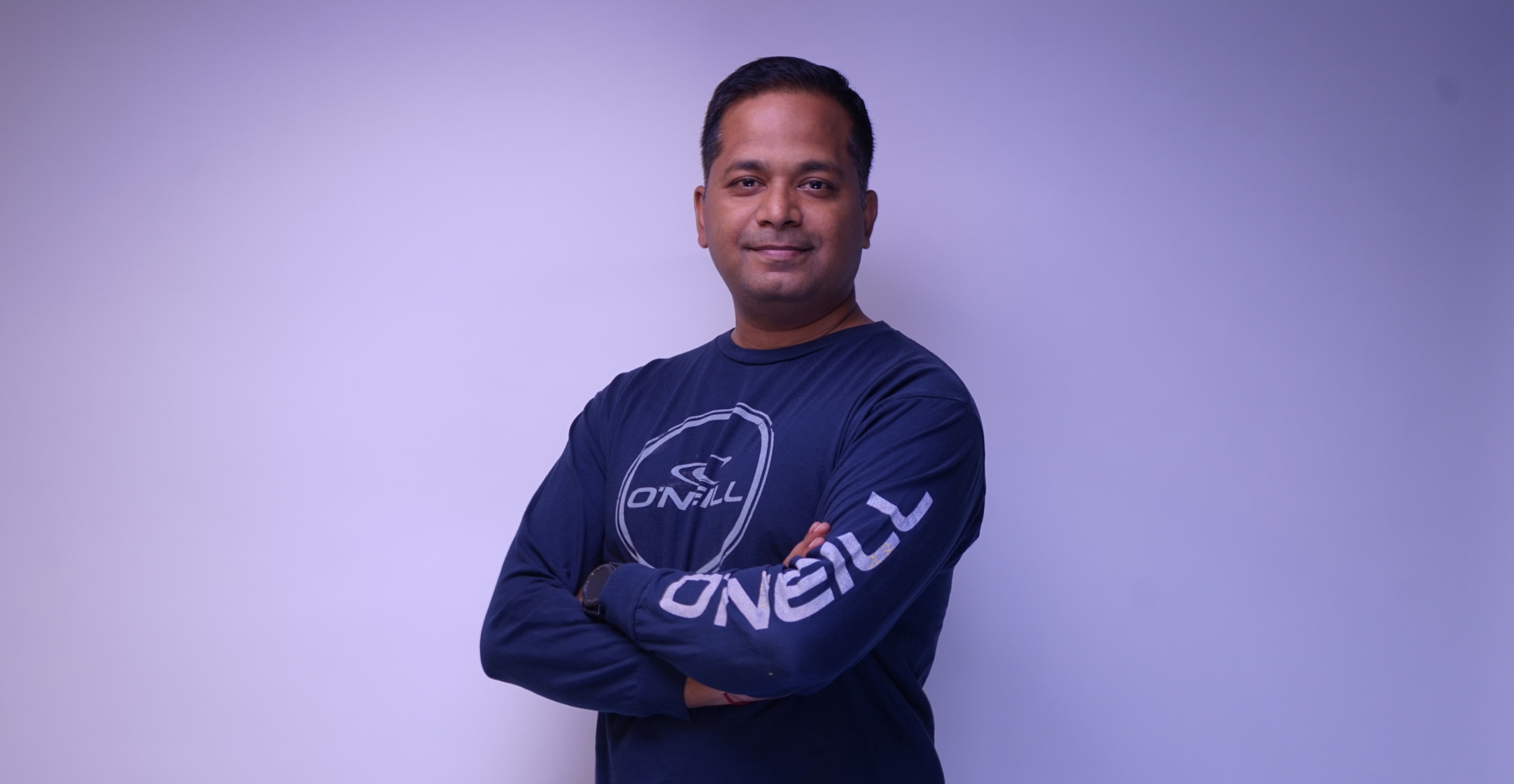
Lead Distributed Systems Engineer on the Returns Platform team at Narvar in San Francisco. Twenty years of enterprise Java platforms, distributed systems, and large-scale services for Narvar, Gilead Sciences, Cisco, Kaiser Permanente, Major League Baseball, and Marsh.
Distributed systems, enterprise integration, and platform architecture, from portal frameworks in 2001 to cloud-native services and AI today.
I'm a Lead Distributed Systems Engineer based in the San Francisco Bay Area with twenty years of experience building enterprise backend platforms, distributed systems, and cloud-native services. The principle I work by: reduce complexity before scaling it. Clear service boundaries, durable integration patterns, strong data contracts, and proven technologies produce systems that teams can understand, operate, and trust long after the original engineers have moved on.
I've built and modernized platforms for Gilead Sciences, Cisco, Kaiser Permanente, Major League Baseball, Marsh, and Narvar, leading each from architecture through production rollout. Along the way I've managed and mentored engineering teams of six to ten across the U.S. and India.
For the past decade I've led backend engineering for Narvar's Returns Platform, a white-label SaaS that powers return experiences for hundreds of major retail brands. The platform integrates carrier systems, retailer workflows, payment rails, customer notifications, compliance logic, configurable rules engines, and analytics pipelines. It runs as a fleet of Java 21 and Spring Boot services on Apache Pulsar, Postgres, Redis, Drools, and Quartz, autoscaling on GCP behind Linkerd.
The work spans unified carrier event ingestion, shipment reconciliation, async webhook processing, PII encryption via Google Tink, feature-flagged rollouts, mTLS via Linkerd, OAuth2 / Okta service auth, HashiCorp Vault for secrets, and rules-driven return eligibility via Drools and a custom DSL, all feeding a 494-table BigQuery analytics surface across 84 Avro and 23 Protobuf schemas. 300+ IaC commits keep every environment identical.
More recently I've been applying deterministic and agentic AI to post-purchase problems: a fraud detection system that combines Drools rules-based signal evaluation with agentic LLM workflows (MCP, RAG, vector databases) to produce auditable, repeatable decisions on return fraud and abuse, and AI workflows for the Customer Data Platform that unify customer profile and event data across the post-purchase lifecycle, with rules-driven guardrails around LLM outputs.
Operating principles formed across a hundred production systems and a dozen platform migrations.
The wrong abstraction slows a team down for years; the right one stops being noticed. Spend more time choosing than building. The cheapest line of code is the one you never write.
Every novel framework is a future migration. I choose mature, well-understood tools and spend the innovation budget where the business actually needs it.
Anyone can write a service. Making it work reliably with a legacy AS400, an enterprise SSO layer, and a Salesforce instance at the same time is where experience shows.
Meaningful changes ship behind feature flags and stay dark until the metrics agree with the plan. The rollback path belongs in the design, not the postmortem.
Most code from 2008 is gone; the engineers I mentored then are senior leaders today. Mentorship is the output that compounds.
Legacy code is institutional memory. Every odd-looking line is usually a fix for an incident that predates you. Understand it before replacing it.
The architecture I've shipped, validated, and refined across more than a dozen enterprise deployments. Different stacks, same shape.
Six featured platforms, followed by the complete career timeline.
I have spent the past decade designing, building, and scaling Narvar's Returns platform, the backend system that powers return experiences for hundreds of leading retail brands.
My work has focused on building reliable, cloud-native services that simplify complex post-purchase workflows across carrier integrations, retailer systems, payment flows, customer notifications, shipment compliance, rules engines, and analytics pipelines. The platform is built primarily on Java-based microservices running across Google Cloud and AWS, with services designed to scale on demand and support high-volume return operations.
At Narvar, I have led backend engineering for major initiatives including Returns V2, Sales Assist, Boxless Returns, and Simple Returns. I have worked on carrier webhook ingestion, shipment reconciliation, asynchronous notification pipelines, feature-flagged rollouts, PII encryption using Google Tink, and configurable return eligibility rules powered by Drools and a custom DSL.
A major part of my work has been modernizing legacy flows into reusable platform capabilities: replacing carrier-specific custom code with unified integration patterns, moving business logic into configuration-driven rules, standardizing data contracts with Avro and Protobuf, and improving reliability through observability, dead-letter handling, and safe dark-mode deployments.
I have also contributed to infrastructure and data platform improvements across multi-cloud environments, helping keep services consistent across AWS VPCs and GCP clusters while supporting scalable analytics through BigQuery.
That modernization extended to the runtime itself: decomposing VM-based services into containerized, stateless microservices on Kubernetes following twelve-factor principles — environment-based configuration, Vault-injected secrets, health and readiness probes, and dev/prod parity — delivered through Ansible, Packer, Helm, and ArgoCD GitOps. Alongside it, an observability-first culture: RED-metric dashboards, SLIs and SLOs with burn-rate alerting, and structured JSON logging, so no service ships without health endpoints and metrics.
The work spans the full stack, too — the React consumer returns UI, the retailer admin portal, and a TypeScript GraphQL API layer (Apollo Server on Node.js) that surfaces platform data to internal operational teams.
The goal throughout: distributed systems that operate reliably at scale, so retailers can offer their customers a smooth, predictable returns experience. More recently, I have built deterministic AI for fraud detection — combining Drools rules-based signal evaluation with agentic LLM workflows (MCP, RAG, vector databases) to produce auditable, repeatable fraud decisions across retailer traffic — and designed AI workflows for the Customer Data Platform (CDP), unifying customer profile and event data across the post-purchase lifecycle with rules-driven guardrails around LLM outputs.
The PQS is the software backbone of Gilead's drug-quality lifecycle, from clinical API through commercial DP. I architected the full migration off legacy .NET to a Liferay-based J2EE platform, designing the JSR-286 portlet runtime, the Spring/Hibernate service framework, and the LDAP authentication hooks that bind it all together.
FDA-validated. Globally deployed. Foster City, San Dimas, Oceanside, and Edmonton, every PDM business unit on the platform runs through it daily.
Led the GTMS uCRM initiative, a customer-focused collaboration platform on WebSphere Portal 6.1 that gave both internal and external users a single point of entry for case management. The backbone integrated Salesforce.com as the case engine for products and services, bridged through a custom WSRP catalog and JSR-286 portlet aggregation.
The work spanned high-level architecture, the SFDC integration component, offshore coordination, and tuning the live portlet performance with Charles.
Owned the design and engineering of Kaiser's internal HR platform: team creation, role assignment, performance goals, feedback loops, and labor-contract management. End-to-end ERD design, JSR-168/286 portlets on WebSphere 6, SSO with Oracle Access Manager, and ETL pulling from DB2 mainframes via Spring Batch + Quartz.
Hierarchical reporting at any organizational depth. Web 2.0 patterns where they made sense, REST/SOAP services where they didn't.
Designed MLB's Financial Desktop, a portal framework that abstracted retrieval across content, document, database, and physical-file repositories into a single client-facing surface. Led a six-engineer team on a Struts 2.0 / WebSphere Portal 6.1 build, with TDD via EasyMock + JUnit and full agile cadence.
Reusable Content Service Wrapper API let consumers query any repository without caring about its underlying transport, a pattern I've reused in three other engagements since.
MarshConnect is Marsh's flagship client portal, risk intelligence, claims data, and transactional workflow for the world's largest insurance broker. I led a ten-engineer team across architecture, sizing, content frameworks, and SOAP/XML claims web services backed by Hibernate and Spring JDBC.
Mentored the offshore team on the WebSphere Portal 6.0 nuances most teams learn the hard way; my advisory role on RUP-driven analysis shaped how the broader org tackled portal builds for years after.
Built CVCM Portlets on Cisco's Liferay-based QUAD platform, giving collaboration users access to 200+ tools with custom categorization and real-time event subscriptions.
Architected CWICO's Broker Portal, a unified WebSphere 6.1 view aggregating broker productivity, commissions, and policy data from legacy AS400 and DB2 systems.
Led migration of one of NYC's premier law firms from WebSphere Portal 5.1 to 6.1, including WCM content transformation and WSRP portlet development for Legal & Finance.
Built GCX CSS Reports, a real-time STP reporting platform for Claims, Premiums, and Fiduciary Accounting. Extended Apache POI for image-insert in JasperReports' Excel exports.
Early enterprise Java work spanning John Deere's IAF framework (Asset Information System, Customer Knowledge Center, SDP project tracking) and Marsh's FAR Fiduciary Accounting Replacement reporting platform.
First chapter: handheld sync between Pocket PC / Palm devices and the web (J2ME, Java Conduit), a logistics CMS, and a remote security-monitoring platform with browser-based device control.
The tools I work with across distributed services, cloud platforms, and AI, organized by category.
 Narvar
 Gilead Sciences
 Cisco
Cisco Major League Baseball
 Guy Carpenter
 John Deere
 Cravath Swaine & Moore
 Country-Wide InsuranceNarvarGilead SciencesCiscoMajor League BaseballGuy CarpenterJohn DeereCravath Swaine & MooreCountry-Wide Insurance
A current snapshot of where my time and attention go.
A decade in on the Returns Platform team: Spring Boot / Java 21 services on Apache Pulsar, Postgres, and Drools, autoscaling on GCP behind Linkerd. Current focus: deterministic AI — combining rules-driven, auditable decisioning with agentic LLM workflows for fraud detection on return abuse patterns, and AI workflows for the Customer Data Platform unifying post-purchase profile and event data.
Most of my learning time goes to agentic AI: planning agents that complete multi-step jobs, MCP for wiring them into backend services, and coding agents that generate integration code. The focus is practical: identifying which production workflows these tools can reliably take over, and building the guardrails they need to run unattended.
Open to senior or principal engineering roles where deep platform thinking matters, companies with serious integration problems, teams that need a calm hand on legacy modernization, or anywhere a long-form architecture instinct earns its keep.
Outside of work I build Raspberry Pi side projects (gpati is the current one) and spend time on the trails at Pleasanton Ridge.
Hiring for a senior or principal engineering role, or planning a platform migration? I typically respond within 48 hours.